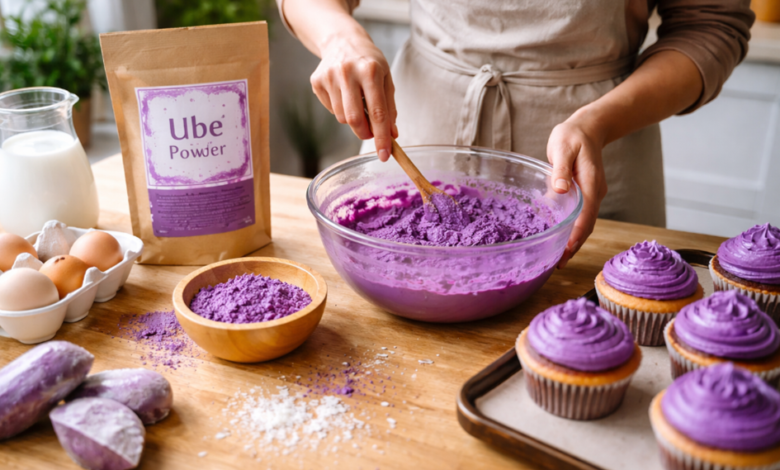
There’s a reason this vivid purple ingredient has taken over kitchens and Instagram feeds alike. Ube powder, made from the beloved purple yam native to the Philippines, isn’t just beautiful it’s bursting with flavour and versatility. Whether you’re a home baker looking to experiment or someone reconnecting with cultural recipes, ube opens the door to a world of colourful creativity. From dreamy desserts to nostalgic comfort food, using ube powder is like dipping a spoon into memory and modernity at once. But before diving into recipes, there’s a lot to uncover: how to use it properly, how much to add, what it pairs with best, and what sets it apart from similar ingredients like taro. In this guide, we’ll explore everything you need to know to master the art of cooking with ube powder.
What is ube powder and how is it made?
Ube powder is a dehydrated form of ube, a type of purple yam that’s native to Southeast Asia, especially the Philippines. It’s not the same as purple sweet potatoes, despite the similar appearance. Ube has a nutty, slightly vanilla-like taste and a deep colour that intensifies when cooked.
To create the powder, the yam is peeled, boiled or steamed, mashed, and then dehydrated into fine particles. The result is a highly concentrated product that retains ube’s unique flavour and aroma, with the added benefit of long shelf life and easy storage.
This form makes it extremely convenient. Unlike fresh ube, which may be hard to source outside of Asia, the powdered version is accessible and versatile—perfect for those who want to explore its culinary potential without fuss. What really sets it apart is the depth of colour. Ube powder doesn’t just add taste—it transforms dishes visually. It’s the edible equivalent of painting with watercolour: subtle when used lightly, but mesmerising when given centre stage.
See also: Software Technology and the Rise of Online Gambling
How to use ube powder in desserts
Sweet treats are where ube truly shines. Its natural sweetness and striking hue make it a favourite in both traditional and modern baking. The key is proper rehydration. To use ube powder in baking:
- Mix 1 part powder with 2 parts warm water (or milk) to rehydrate it
- Let it sit for 10–15 minutes until smooth
- Incorporate it into your base recipe like mashed ube
This method makes it ideal for:
- Cakes – such as ube chiffon or sponge
- Cookies – chewy, soft-centred with a pop of colour
- Ice cream – just mix into your custard base before churning
- Custards and puddings – where its flavour infuses beautifully
Using ube powder for baking offers better control over moisture content compared to using frozen or mashed ube. It integrates seamlessly into dry mixes and can be used year-round.
Can you use ube powder in drinks and lattes?
Absolutely. In fact, ube’s creamy, nutty profile makes it a rising star in the beverage scene. Whether you’re creating a café-style drink at home or mixing something new for a gathering, ube powder adds both taste and colour. Here’s how to make it work:
- Rehydrate the powder as you would for baking
- Blend with milk, condensed milk, or a non-dairy alternative
- Serve hot or cold
Popular drink ideas include:
- Ube lattes
- Ube milk teas
- Iced ube macchiatos
- Ube frappés
Tip : Pair it with coconut, vanilla, or pandan for an aromatic twist.
Use high-quality powder to avoid clumping and always sweeten to taste, as the base ube flavour is subtle. This purple drink trend isn’t just a visual treat—it’s a cultural connection in a cup.
How to store ube powder for freshness
Proper storage can dramatically extend the lifespan and potency of your ube powder. Since it’s a dry product, it’s sensitive to moisture, air and light. Here’s how to keep it in top condition:
Airtight containers are key
Always store ube powder in airtight jars or resealable bags. Exposure to air can lead to clumping and loss of aroma.
Cool, dry place
Keep the powder in a dark cupboard or pantry, away from direct sunlight or heat sources. Fridges can introduce unwanted moisture, so room temperature is usually best. If you’ve bought in bulk, divide the powder into small batches and only open what you need. This ensures the rest stays untouched and fresh longer. When stored correctly, ube powder can last for 6 to 12 months, retaining both colour and flavour. Watch for signs of spoilage like musty smell or discolouration—it’s rare, but worth checking periodically.
Common dishes that use ube powder
Ube is rooted in Filipino cuisine, where it features in a range of festive and everyday dishes. With the powdered form, many of these recipes are now more accessible globally.
- Ube halaya
- Ube cake
- Ube ice cream
- Ube pandesal
- Ube crinkles
- Ube cheesecake
- Halo-halo
- Ube waffles
Ube halaya (a thick yam jam) is perhaps the most well-known. You can make a quick version by mixing rehydrated powder with condensed milk and butter, heating until thick and glossy. Modern fusion dishes are also embracing ube—think of ube tiramisu, ube pancakes or even purple macaroons.
Final thoughts on using ube powder
Ube powder is more than just a colourful trend—it’s a gateway to flavour, culture, and creativity in the kitchen. It allows home cooks to experiment with traditional Filipino dishes, while also inspiring modern desserts and drinks that delight the senses. Whether you’re baking a cake, crafting an iced latte, or cooking a family dessert, ube powder offers both convenience and authenticity. Its long shelf life, bold colour and unmistakable taste make it an ingredient worth exploring. Have you tried cooking with ube powder before? If not, this could be your next pantry essential.