Cord Blood vs. Cord Tissue vs. Placental Stem Cells: What’s the Difference and Which Should You Bank?

Calling the nine months of your pregnancy a rollercoaster ride would not be an understatement. There is simply so much to do, it can easily get overwhelming. Even the smallest of decisions can feel pivotal and critical. It is no wonder then that something as major as deciding which type of stem cell banking to go for would take up a lot of your headspace. It is a life-changing decision and being fully informed of each type is the only way to make it wisely.
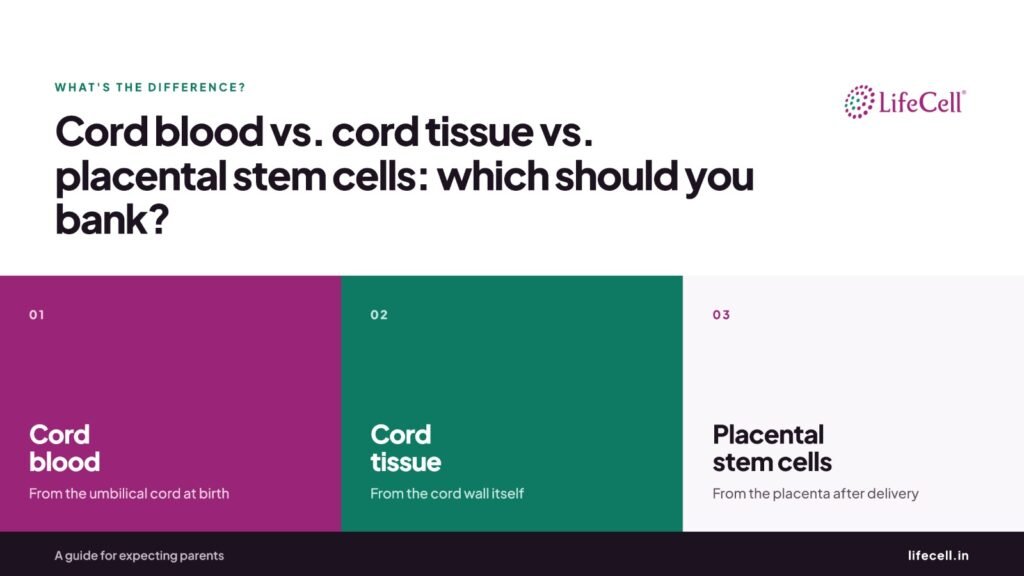
So let us tell you everything you need to know about cord blood vs. cord tissue vs. placental stem cells in our concise guide so you know exactly which one to bank.
Understanding Umbilical Cord Blood
Umbilical cord blood is the remaining blood that the cord contains after it has been clamped and cut just after your baby is born. This blood is incidentally quite rich in something known as Hematopoietic Stem Cells. These cells are extremely valuable because they are capable of creating the components that power your blood and immune system, namely your red blood cells, white blood cells, and platelets.
The fact that they can regenerate healthy cells is what makes them a powerful ally against 80+ blood disorders, blood cancers, metabolic disorders, and immune disorders. Cord blood stem cells are, in fact, stored to treat these very conditions if they arise in the future.
Moreover, their scope as a viable medical treatment option is expanding everyday. Clinical trials are being conducted the world over to determine their feasibility for a host of common diseases, and some headway has already been made into treating diseases like diabetes and cerebral palsy.
Understanding Umbilical Cord Tissue
Before we talk about cord blood tissue, we would like to disclose that the Indian government does not allow cord blood tissue banking in the country, which means it is already out of the race, but you should know about it regardless.
To continue, the umbilical cord itself is made up of tissue and this tissue is a great source of what is known as Mesenchymal Stem Cells. These stem cells do not build blood, they do something else. They are responsible for developing the connective and structural tissues in your body, and that includes a host of important components such as bones, cartilages, muscles, nerves, and fat cells.
Because of their ability to generate structural and connective tissues, cord tissue stem cell banking is used as a regenerative treatment option for such as osteoarthritis, heart conditions, autoimmune disorders, spinal cord injuries, and sports-related cartilage damage. However, it is still in its nascent stages as a treatment option and more research is required to solidify its position in the medical world. It looks promising though.
Understanding Placental Stem Cells
Placental stem cells are quite different from umbilical cord and umbilical cord tissue. For starters, they have nothing to do with the umbilical cord. Instead, stem cells and specialized ones are extracted from the placenta and the amniotic membrane of your baby immediately after birth.
However, just like cord tissue, placental stem cells are also an excellent source of Mesenchymal Stem Cells along with specialized epithelial stem cells, which serve their own unique purpose in the human body.
That said, placental stem cells are still being researched as a medical treatment for various conditions with focus on advanced wound healing, organ repair, cardiovascular therapies, and broader regenerative applications. The reason why they are being chosen for the aforementioned conditions is because these cells are “immunologically privileged” since they are naturally designed to protect a foetus from its mother’s immune system. This gives them an edge as a regenerative treatment option.
See also: Your Visionary Ally: Building a Lifelong Partnership for Optimal Eye Health
Which Should You Bank?
Speaking of which of the three you should bank, cord blood banking is still the absolute gold standard of stem cell banking. It is the number one option available in India. And while you have the choice to go for either private, public or community cord blood banking, we suggest the latter as it strikes the perfect balance between the value it offers and its annual fee. With community cord blood banking, such as the one LifeCell offers, you get access to both your deposit and community units to find the best donor match, which is bang for buck in our opinion.
Conclusion
There is no denying that stem cell banking is one of the most crucial and essential decisions you will ever make during your pregnancy. It makes sense to weigh the pros and cons of each of the options available to you so you can choose what is best for your baby and your family.